
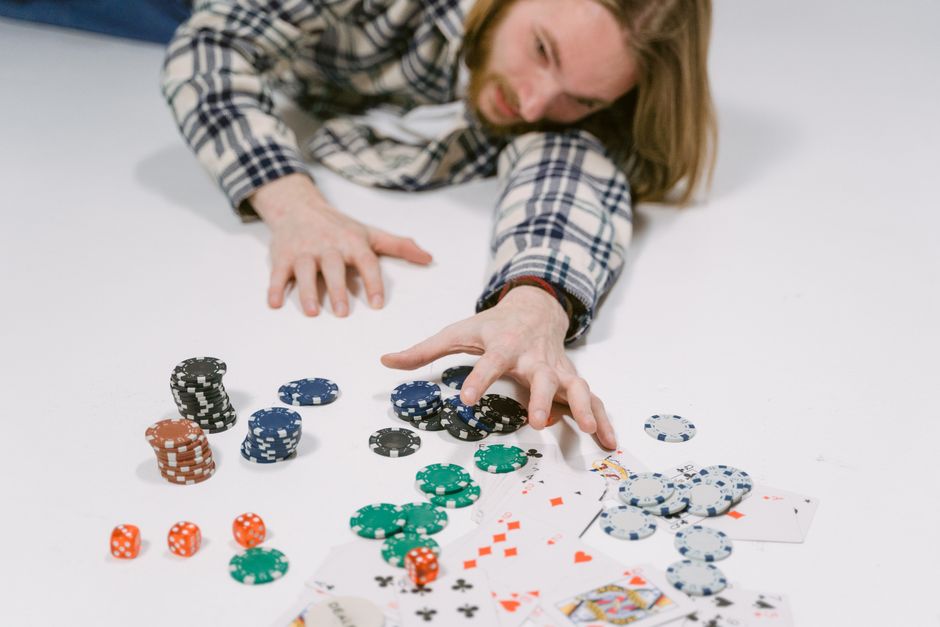
Slot Volatility Decoded: Why Your $100 Lasts Longer on Some Machines
You sit down at a slot machine with $100. Two hours later, you're still playing. Same hundred bucks. Now picture a different machine where that same $100 evaporates in twelve minutes flat. Neither experience is random chance. What separates them is volatility, and understanding it is the single most practical piece of knowledge a slots player can carry into a casino.
Volatility isn't marketing fluff invented to sell games. It's a mathematical property baked into the payout structure of every slot ever built, and it determines how your session will feel almost as much as your bankroll size does.
What Volatility Actually Measures
Strip away the jargon and volatility describes one thing: how widely a game's outcomes scatter around its average return. A low-volatility slot pays small amounts frequently, so your balance drifts gently downward (or sideways, on a good day). A high-volatility slot can go fifty spins without a sniff of a win, then hand you 800x your stake in one tumble.
The average return — the RTP — stays the same across the scale. Two games can both hold a 96% RTP and feel completely different. Volatility is about the rhythm of the payouts, not the total percentage returned over millions of spins.
A quick way to visualise it:
- Low volatility: frequent small wins, long sessions, gradual bankroll decline. Think classic three-reel games with simple paylines.
- Medium volatility: a balanced mix. Wins arrive at a reasonable pace, with occasional modest multipliers.
- High volatility: long dry spells punctuated by huge potential payouts. Modern Megaways games and most bonus-buy titles live here.
Why Your Bankroll Behaves Differently on Each Machine
Here's the part most players never internalise. On a high-volatility slot with a $1 spin, a $100 bankroll represents 100 spins. If the game's hit frequency is 18% — meaning roughly one in five spins returns anything, including partial stake returns — you can realistically stare at 40+ dead spins in a row before tasting a win. That's not a malfunction. That's the design.
On a low-volatility slot with a 35% hit frequency, those same 100 spins feel alive. You're consistently getting something back, even if it's 0.2x your stake most of the time. Your balance still declines, because the house edge is working quietly in the background, but the experience is entirely different.
Neither game is more generous. They just distribute the same theoretical return in different patterns.
Practical takeaway: match your bankroll to volatility. A $100 bankroll on a $1-spin high-volatility slot is a lottery ticket with a short lifespan. Reduce your stake to $0.20 and suddenly you have 500 spins to survive the dry spells and reach the bonus round. A good place to continue is สล็อต.
Reading the Signals Before You Spin
You don't need a PhD to assess a slot. Most modern games publish their key stats, and even when they don't, the mechanics tell you plenty.
- Check the max win figure. A slot advertising a 5,000x maximum is usually medium volatility. One claiming 50,000x or higher is almost certainly extreme volatility. The bigger the advertised ceiling, the rarer the big hits.
- Look at the paytable structure. If low-value symbols pay 0.1x to 0.5x for three of a kind, the game leans volatile — those tiny wins won't sustain you.
- Note the mechanic. Expanding reels, cascading wins, and multiplier trails tend to push volatility upward. Simple fixed-line games sit lower.
- Use demo mode first. Fifty spins on a free version tells you more about the feel of a game than any review.
Developers like Nolimit City, Hacksaw Gaming, and Push Gaming have built reputations on brutally high-volatility titles. If you see their logos, adjust your expectations — and your stake — accordingly.
Volatility Beyond Slots: Poker and Betting
The same concept governs other corners of gambling, just under different names.
In poker, variance is the term of art. A cash game grinder playing 50,000 hands a month experiences far less variance than a tournament player who might go 30 buy-ins without a final table. The tournament player accepts enormous swings for the shot at a five-figure score. That's a volatility choice, made consciously, the same way a slots player picks a 50,000x game over a 500x one.
In sports betting, volatility shows up in your betting markets. A moneyline bet on a heavy favourite at 1.20 odds is low volatility: you win often, but the payout is thin. A 12-leg accumulator paying 500/1 is the betting equivalent of a jackpot slot — almost always loses, occasionally transforms your month. Bookmakers know this. That's why they promote accas so aggressively. The margin compounds with every leg, and the variance keeps customers coming back for the one that lands.
Common Mistakes and How to Avoid Them
The most expensive error is mismatching expectations with reality. Players buy into a 100,000x-max slot expecting steady action, lose their bankroll in twenty minutes, and conclude the game is rigged. It isn't. They chose a machine designed to punish patience.
Other costly patterns:
- Chasing on high volatility. Raising your stake after a dry spell increases the damage without improving your odds. The next spin's outcome has nothing to do with the last fifty.
- Ignoring session length. High-volatility games demand either a small stake or a large bankroll. Pick one.
- Trusting "hot" and "cold" machine folklore. Every spin is independent. A machine that hasn't paid in an hour is no closer to paying than it was at the start.
- Neglecting the RTP difference. A 94% RTP game versus a 96.5% one costs you 2.5% of every dollar wagered over time. At $500 of total wagering, that's $12.50 — real money quietly leaked.
Making Volatility Work in Your Favor
Treat volatility as a dial you control. Want a long evening with drinks and conversation? Choose low or medium volatility, keep stakes small, and enjoy the ride. Chasing a headline win with $50 you're prepared to lose? Go high volatility, pick a game with a bonus buy if the math appeals, and accept that nine times out of ten you'll bust.
What you should never do is sit at a machine without knowing which category it falls into. That's not gambling on the game — that's gambling on your own ignorance of it.
tag: iGaming

Oliver Radcliffe Author
Make the most of awkward spaces with slim shelving, hooks and baskets that keep everyday items tidy and accessible.
YOU MAY ALSO LIKE

Clever Storage Solutions for Narrow Hallways
Sep 21
10Simple mixtures using vinegar, bicarbonate of soda and lemon can clean most surfaces without harsh chemicals or plastic packaging.
read more
Natural Cleaning Products You Can Make at Home
Sep 17
10These straightforward builds use basic tools and reclaimed timber to create useful shelves without spending a fortune at all.
read moreDecluttering
-

ERRIC CATONA
Choose light colours, multi-purpose furniture and clever lighting to make a compact bedroom feel calm, open and airy.
May 19, 2016 at 5.12 pm
Reply
ERRIC CATONA
Group similar items, use risers and labels, and keep daily essentials within easy reach to reduce morning stress.
May 19, 2016 at 5.12 pm
Reply -
ERRIC CATONA
Even a small balcony can supply fresh mint, basil and rosemary with the right containers, compost and regular watering.
May 19, 2016 at 5.12 pm
Reply
Storage Ideas
Your email address will not be published.